
Converting fluorescent lights to LED can be as simple as swapping the tubes, or it can involve rewiring, an LED retrofit kit, or a full fixture replacement. Which route fits your building depends on the ballast condition, the state of the existing fixtures, your budget, and the light levels the space actually needs.
Here is the short version. For the lowest upfront cost, Type A (plug-and-play) LED tubes are usually the fastest choice. To cut long-term maintenance, Type B ballast-bypass tubes or LED retrofit kits tend to pay off. When fixtures are aging, damaged, or badly laid out, replacing the whole fixture is often the better long-term investment.
This guide walks through the five main fluorescent-to-LED conversion methods, a simple planning process, and the ballast, wiring, and disposal details that decide whether a commercial or industrial upgrade goes smoothly. Because electrical and disposal rules differ by country and region, treat the technical notes here as general guidance and confirm the requirements that apply where you operate. For background on the efficiency case behind these upgrades, the U.S. Department of Energy's LED lighting resources are a reliable starting point.
What Is the Best Way to Convert Fluorescent to LED?
The best method depends on the condition of the fixture and how much electrical work you are prepared to do.
| Conversion Option | Best For | Main Advantage | Main Limitation |
|---|---|---|---|
| Type A LED tubes (plug-and-play) | Fast, low-cost tube replacement | Minimal installation work | Existing ballast stays a failure point |
| Type B ballast-bypass LED tubes | Lower long-term maintenance | Removes the ballast from the system | Requires wiring changes |
| Type C LED tubes (remote driver) | Larger, standardized retrofits | Driver-based control and maintenance | More parts and installation work |
| LED retrofit kit | Keeping the housing, upgrading performance | Better light engine and optics | Costs more than a simple tube swap |
| Full LED fixture replacement | Old, damaged, or poorly designed fixtures | Best performance and design flexibility | Highest upfront cost |
In commercial buildings the cheapest option is rarely the cheapest over five years. A plug-and-play tube keeps installation quick, but an aging ballast left in place becomes the next service call. A ballast-bypass or retrofit-kit approach costs more to install and removes that failure point. The right decision is the one that still makes sense after several years of operation, maintenance, and access costs.

How to Plan a Fluorescent-to-LED Conversion
Before buying anything, work through a short planning sequence. For a single 4-foot fixture the steps take minutes; across a whole facility they prevent expensive mistakes. For a worked example on the most common tube size, see our guide on how to convert a 4-foot fluorescent light to LED.
- Identify the tube type - T5, T8, or T12. This drives lamp diameter, socket type, and which LED options apply.
- Check the ballast - read the label to confirm whether it is electronic or magnetic, and note its age.
- Decide the ballast strategy - keep it (Type A), bypass it (Type B), or replace it with a remote driver (Type C).
- Inspect the sockets (tombstones) - confirm whether they are shunted or non-shunted, and what wiring method they allow.
- Compare light output, CCT, and controls - match lumens, color temperature, and any sensor or dimming needs to the task.
- Plan lamp disposal and code compliance - arrange recycling and confirm local electrical requirements before work starts.
- Choose the path - Type A tube, Type B or C tube, retrofit kit, or a new fixture.
Identify Your Existing Fluorescent Fixture
A correct upgrade starts with knowing exactly what you already have. Two minutes with a fixture open usually settles most of the questions above.
Check the Tube Type: T5, T8, or T12
Most linear fluorescent lamps are T5, T8, or T12. In commercial buildings, T8 and T5 systems dominate offices, schools, retail, warehouses, and utility areas. A T12 system is a strong signal that the fixture and ballast are older and may be near the end of their useful life, which often points toward Type B tubes or full replacement rather than a plug-and-play swap.
Check the Ballast
The ballast regulates current for the fluorescent lamp, and it decides how much freedom you have. A newer, compatible electronic ballast can support a Type A LED tube. An older or magnetic ballast tends to cause flicker, compatibility problems, and early lamp failure, and it remains a maintenance liability even after the tubes are new. Bulb-only Type A replacement is the easiest, lowest-cost path, but it carries the highest risk of premature failure precisely because it leaves the weakest component in place.
Check the Fixture Condition
Look for rust, cracked or damaged sockets, yellowed lenses and broken diffusers, loose wiring, persistent flicker or buzz, poor light distribution, hard-to-reach mounting, and harsh environments (damp, dusty, cold, hot, or high-vibration). When several of these show up together, replacing the fixture usually beats spending labor to extend old hardware.
Field note: on retrofit walkthroughs, the fixtures that generate the most repeat service calls are almost always the ones where crews tried to save labor by reusing marginal ballasts or corroded tombstones. The tube is rarely the problem - the socket and ballast are.
The 5 Ways to Convert Fluorescent Lights to LED
Option 1: Type A (Plug-and-Play) LED Tubes
Type A LED tubes are designed to run on a compatible existing fluorescent ballast, so the old tube comes out and the LED tube goes straight in. No rewiring is needed when the ballast is a good match.
Best for: quick upgrades, the lowest upfront installation cost, fixtures with newer compatible ballasts, and small projects where rewiring is impractical.
Watch out for: ballast compatibility, ballast age, future ballast failure, and flicker if the match is poor. Type A is simple, but it does not remove the ballast - when the ballast fails, the fixture still needs a truck roll. As a rule of thumb, we would not recommend Type A across a facility where a meaningful share of ballasts are already failing.
Option 2: Type B Ballast-Bypass LED Tubes
Type B tubes remove the ballast entirely and wire the LED tube directly to line voltage using a built-in driver. This is a common choice for cutting ballast-related maintenance, and it deserves a little extra care during installation. Two details matter most:
- Single-ended vs double-ended wiring: single-ended tubes carry line and neutral into one end; double-ended tubes feed one pin per end. The wiring at the tombstones must match the tube you buy.
- Shunted vs non-shunted sockets: non-shunted tombstones keep the two contacts electrically separate, which single-ended Type B tubes usually require, while many original fluorescent fixtures used shunted sockets. Getting this wrong is a frequent cause of dead tubes and safety issues, so it is worth confirming before ordering.
If the difference between plug-and-play and bypass is still fuzzy, our explainer on the basics of ballast bypass and plug-and-play tubes breaks it down further.
Best for: reducing ballast-related maintenance across many fixtures, older systems, and warehouses, workshops, and back-of-house spaces.
Watch out for: wiring changes, socket compatibility, required safety labeling after modification, and the need for qualified electrical work.

Option 3: Type C LED Tubes with a Remote Driver
Type C tubes use a separate external driver in place of the ballast. The driver powers the LED lamps and makes dimming and controls more predictable, which suits larger programs that want standardized, driver-serviceable systems. The trade-off is added components, more installation time, and more planning than Type A or B. For a handful of fixtures it is usually overkill; for a coordinated facility rollout it can be the cleanest long-term platform.
Option 4: LED Retrofit Kits
A retrofit kit keeps the usable part of the existing housing but replaces the internal light engine, wiring, and optics. It sits between a tube swap and a full replacement, and it often delivers better light quality and lower maintenance than a basic retube - especially in troffers, strips, and linear fixtures in offices and schools. Watch housing compatibility, labor time, and product listing and rebate eligibility. Our overview of a linear fixture LED retrofit shows how kits compare with replacing tubes alone.
Option 5: Complete LED Fixture Replacement
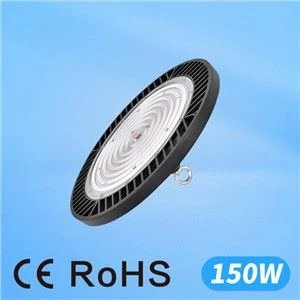
Full replacement removes the fluorescent fixture and installs an integrated LED unit. It costs the most upfront and returns the most: better optics, cleaner layouts, native controls, and warranty coverage on the whole assembly. It is the natural choice for warehouses moving from fluorescent high bays to LED high bay fixtures, and for offices swapping tired troffers for modern LED panels. Budget for material cost, labor, possible ceiling work, and lighting-layout planning.
Which Fluorescent-to-LED Option Should You Choose?
| Situation | Recommended Option |
|---|---|
| Ballast is newer and compatible | Type A LED tube |
| Ballast is old or failing across many fixtures | Type B or Type C tube, retrofit kit, or replacement |
| You need the fastest installation | Type A LED tube |
| You want to eliminate ballast maintenance | Type B tube or retrofit kit |
| The housing is still good | LED retrofit kit |
| Fixture is damaged, rusty, or poorly designed | Full LED fixture replacement |
| Rebate eligibility matters | Specify DLC-listed products |
For commercial upgrades, rebate eligibility can move the budget noticeably. In North American incentive programs, the DesignLights Consortium maintains Qualified Products Lists that many utilities use to qualify high-efficiency LED products - you can check current requirements at the DesignLights Consortium, and our short introduction to DLC explains why the listing matters. Rebate rules are regional, so confirm eligibility before you specify anything.
Recommended LED Option by Fixture and Building Type
Two quick reference tables to translate the options above into common spaces.
| Existing Fixture | Recommended LED Option | Why |
|---|---|---|
| 2x4 fluorescent troffer | LED panel or retrofit kit | Better appearance and even distribution; see LED panel vs LED troffer |
| Strip / wraparound fixture | Type B tube or retrofit kit | Low-cost maintenance reduction |
| Fluorescent high bay | LED high bay replacement | Better optics and sensor-ready controls |
| Vapor-tight / damp location | Sealed LED fixture | Ingress protection and reliability |

| Building Type | Typical Path |
|---|---|
| Office | LED panels, retrofit kits, or new troffers |
| Warehouse / industrial | Type B tubes for strips; high bay replacement overhead |
| School corridor / classroom | Type B tubes or retrofit kits |
| Retail | Retrofit kits or new fixtures for appearance |
When Should You Replace the Whole Fixture Instead of Retubing?
Retubing is not always the right answer. Full replacement tends to win when the fixture is genuinely worn - think aging housings with degraded sockets, yellowed lenses, or recurring ballast failures rather than a fixed number of years. Other triggers include poor light uniformity, a need for dimming, sensors, or networked controls, a ceiling layout that should be redesigned, harsh operating environments, and fixtures that are simply expensive to access and maintain.
For example, an office with tired fluorescent troffers usually benefits from LED panels or modern troffers because the upgrade improves both appearance and distribution. A warehouse with fluorescent high bays mounted where maintenance access is costly is often better served by LED linear high bays with motion sensors, since fewer service visits offset the higher upfront cost.
Safety, Wiring, and Disposal
Fluorescent-to-LED conversion is electrical work, and the risk scales with the method.
Turn Off Power and Verify
Before touching a fixture or changing wiring, switch off the correct breaker and confirm the fixture is de-energized with a voltage tester. Working live carries a real electric-shock risk, and verification takes seconds.
Use a Qualified Electrician for Wiring Changes
Type A tubes may not need rewiring on a compatible ballast. Type B, Type C, retrofit kits, and full replacements normally do. In commercial buildings, a licensed or qualified electrician should perform or supervise this work - especially when bypassing a ballast, replacing sockets, working with line voltage, modifying many fixtures, or updating schools, healthcare facilities, warehouses, and public buildings where code compliance and inspection readiness matter.
Dispose of Fluorescent Lamps Properly
Fluorescent lamps contain mercury and should not go in ordinary trash. Use approved recycling programs for CFLs, fluorescent tubes, and other mercury-containing lamps; the US EPA guidance on recycling and disposing of mercury-containing bulbs is a good reference for U.S. sites, and local requirements vary elsewhere. On commercial jobs, plan disposal before installation starts - a large retrofit generates many tubes at once, so storage, handling, and recycling belong in the project scope from day one.
Cost Factors: Why the Cheapest Tube Is Not the Lowest-Cost Conversion
Total cost depends on far more than the price of a tube. The variables that move a commercial budget include the number and type of fixtures, ballast condition, labor rates, ceiling height and access difficulty, whether wiring or sockets must change, new lenses or diffusers, lamp disposal, rebates, and how easy the fixtures will be to maintain over the next several years.
A Type A tube is cheapest on day one, but a later ballast failure means another service call. A Type B tube or retrofit kit costs more to install and removes that failure mode. A full replacement costs the most upfront and returns better distribution, controls compatibility, and warranty coverage. Judge the decision on total cost of ownership - labor hours, fixture access, downtime, warranty, and rebate qualification - not lamp price alone.
Common Fluorescent-to-LED Mistakes to Avoid
- Buying tubes without checking ballast compatibility. Not every Type A tube works with every ballast; check the manufacturer's compatibility list first.
- Keeping old ballasts to save labor. The upfront saving disappears the first time an aging ballast fails after the upgrade, and repeat failures across a facility add up fast.
- Ignoring light output and distribution. LED watts are not fluorescent watts. Compare lumens, beam angle, spacing, mounting height, and the light levels the space actually requires.
- Choosing the wrong color temperature. A warehouse, office, classroom, and healthcare space rarely want the same CCT; pick it for the task and visual comfort. Our note on the color temperature scale can help.
- Forgetting controls. If occupancy sensors, daylight harvesting, or dimming are in the plan, choose products that support them from the start.
- Treating disposal as an afterthought. Mercury handling belongs in the project scope, not the cleanup.
Fluorescent to LED Conversion FAQ
Q: Can I replace fluorescent tubes with LED tubes directly?
A: Sometimes. With Type A tubes and a compatible ballast, you can often swap without rewiring. If the ballast is old, incompatible, or failing, a Type B tube, retrofit kit, or full replacement is usually the better move.
Q: Do I need to remove the ballast when converting fluorescent to LED?
A: Not always. Type A tubes use the existing ballast, Type B tubes bypass it, and Type C tubes use a remote driver. Retrofit kits and full replacements remove the fluorescent ballast from the system.
Q: Can I bypass the ballast myself?
A: Ballast bypass changes the fixture wiring and works with line voltage, so it should be done or supervised by a qualified electrician, with the correct safety labeling applied afterward. It is not a casual DIY task in a commercial building.
Q: Do LED tubes work with electronic ballasts?
A: Type A (plug-and-play) tubes are built to run on compatible electronic ballasts - but only those on the manufacturer's compatibility list. Magnetic and older ballasts are common sources of flicker and early failure.
Q: What happens if I install the wrong LED tube?
A: Mismatches - a single-ended tube in a shunted socket, or a Type B tube on a live ballast - typically cause dead lamps, flicker, or a genuine safety hazard. Confirm tube type, wiring method, and socket type before ordering.
Q: How do I convert a T8 fluorescent to LED?
A: T8 is the most common commercial format. Confirm the ballast, then choose a Type A tube (if the ballast is compatible), a Type B bypass tube, or a retrofit kit. For badly worn T8 strip or troffer housings, replacement often makes more sense than retubing.
Q: Is it better to replace T12 fixtures with LED fixtures?
A: Frequently, yes. T12 systems usually mean older magnetic ballasts and aging housings, so a Type B tube or a full LED fixture tends to beat a plug-and-play swap on reliability.
Q: What is the cheapest way to convert fluorescent lights to LED?
A: Type A plug-and-play tubes are the cheapest upfront when the ballast is compatible and in good shape - but the lowest upfront cost is not always the lowest long-term cost.
Q: Are fluorescent lamps hazardous waste?
A: They contain mercury and should be recycled through approved local programs. On commercial projects, confirm disposal requirements before the retrofit begins.
Final Recommendation
The best fluorescent-to-LED conversion balances installation cost, safety, maintenance, lighting performance, and long-term reliability. Choose Type A tubes for a fast, low-cost upgrade on a healthy ballast. Choose Type B or C when you want to eliminate ballast-related failures. Choose a retrofit kit when the housing is worth keeping but the light quality needs work. Choose full replacement when the fixture is worn, outdated, or wrong for the space.
For commercial and industrial projects, do not judge the conversion by tube price. Start with the fixture condition, confirm the electrical requirements, check rebate eligibility, plan safe disposal, and pick the path that still makes sense after years of operation.