Explosion-proof electrical equipment is not simply ordinary industrial equipment with a thicker housing, tighter gasket, or higher IP rating. Once equipment is installed in a hazardous classified location, the design problem changes: the equipment must be suitable for the specific gas, vapor, dust, fiber, temperature, and classification conditions that may be present.
That difference affects much more than the enclosure. It can change the way ignition risk is controlled, how covers and joints are constructed, which cable entries may be used, how heat is managed, what markings must appear on the product, which accessories are acceptable, and whether a field modification is permitted.
The first question is therefore not "Which explosion-proof light or box should I buy?" The first question is "What is the documented classification of the exact installation location, and what protection method and approval does that location require?"
Standard electrical equipment is intended for ordinary locations and is primarily selected around electrical safety, environmental exposure, and operating performance. Hazardous-location equipment must also control ignition risk through a protection method and approval that match the classified location.

For some equipment, the protection concept is containment. In IEC terminology, IEC 60079-1 covers equipment protection by flameproof enclosures "d." The enclosure is constructed and tested as part of a system intended for explosive gas atmospheres. Other hazardous-location equipment may instead use increased safety, intrinsic safety, pressurization, encapsulation, or another approved technique. The OSHA hazardous-locations requirements in 29 CFR 1910.307 likewise recognize multiple protection techniques rather than requiring one enclosure design for every classified location.
A weatherproof enclosure addresses environmental ingress. Hazardous-location approval addresses ignition risk. A product may need both, but one does not replace the other.
Standard vs Explosion-Protected Electrical Equipment at a Glance
| Design Point | Standard Electrical Equipment | Hazardous-Location / Explosion-Protected Equipment |
|---|---|---|
| Installation area | Ordinary locations | Documented hazardous classified locations |
| Main safety concern | Electrical shock, short circuit, overheating, environmental exposure | Ordinary electrical hazards plus ignition of a flammable or combustible atmosphere |
| Enclosure | Selected for mechanical and environmental requirements | May be part of a certified ignition-protection concept |
| Covers and joints | Usually designed for access and environmental sealing | May be safety-critical parts of flameproof or other certified construction |
| Arcs and sparks | Permitted where normal product requirements allow | Must be controlled by the approved protection technique |
| Surface temperature | Managed for product performance and normal thermal safety | Must also remain within the approved hazardous-location temperature limits |
| Cable entries | Chosen mainly for cable support, sealing, and environmental protection | Must also match the protection concept, cable type, threads, certificate conditions, and wiring method |
| Accessories | Often interchangeable within manufacturer and code limits | Substitution can affect the evaluated hazardous-location assembly |
| Field modification | May be possible under manufacturer and code requirements | Drilling, machining, changing fasteners, covers, entries, or accessories can affect approval |
| Documentation | Datasheet, installation instructions, ordinary product approvals | Hazardous-location marking, certificate/listing, installation conditions, ambient limits, approved accessories, and special conditions where applicable |
1. Start With Hazardous-Area Classification
A refinery, chemical plant, grain facility, wastewater site, paint booth, fuel-storage area, or pharmaceutical plant is not automatically one continuous hazardous location. Classification applies to specific rooms, sections, zones, and installation points based on the materials that may be present and the likelihood that an ignitable concentration will occur.
OSHA 1910.307 requires hazardous locations to be classified according to the properties of flammable gases, vapors, liquids, combustible dusts, or fibers that may be present and the likelihood that a hazardous concentration or quantity exists. OSHA also states that each room, section, or area is considered individually. That makes the classification drawing or documented study a purchasing input, not an administrative document to check after the equipment arrives.
For a deeper overview, see the site guide on how to classify hazardous locations.
Class and Division
In North American projects, you may encounter Class/Division designations. At a high level:
- Class I addresses flammable gases and vapors.
- Class II addresses combustible dust.
- Class III addresses ignitable fibers or flyings.
Division 1 and Division 2 distinguish the conditions under which the hazard may be present. But a phrase such as "Class I, Division 2" is not necessarily a complete purchase specification. OSHA also requires approved equipment to match the ignitable or combustible properties of the specific material involved, and marking requirements can include class, group, and operating temperature.
Zone Classification
IEC-based systems use Zones for explosive atmospheres. Gas locations commonly use Zone 0, Zone 1, and Zone 2; combustible-dust systems use Zone 20, Zone 21, and Zone 22. The IECEx standards list identifies IEC 60079-10-1 for classification of explosive gas atmospheres and IEC 60079-10-2 for explosive dust atmospheres.
Do not convert Division and Zone classifications with a casual one-line equivalence. The project classification study, governing code, certification system, and authority requirements determine what equipment is acceptable.
2. "Explosion-Proof" Does Not Mean "Nothing Can Ignite Inside"
The word "explosion-proof" can create the wrong mental picture. In a flameproof or explosionproof containment concept, safety does not depend on guaranteeing that no ignition can ever occur inside the equipment. Instead, the evaluated construction is intended to prevent an internal ignition from propagating into the hazardous atmosphere outside under the conditions covered by the approval.
The IEC describes IEC 60079-1 as the standard containing specific construction and testing requirements for electrical equipment using flameproof enclosure type of protection "d" in explosive gas atmospheres.
That is why a hazardous-location enclosure cannot be judged by appearance. A heavy casting may look reassuring, but the actual safety system can include the enclosure geometry, covers, joints, threads, entries, plugs, windows, fasteners, component arrangement, temperature limits, and installation conditions as evaluated for the product.
Flameproof Joints Are Functional Safety Features
On a standard weather-resistant enclosure, a cover joint is often primarily about access and ingress protection. On flameproof equipment, certain joints can be part of the certified protection concept. Machining, corrosion, damage, incorrect fasteners, unsuitable replacement parts, or unauthorized resurfacing may change the construction that was evaluated.
For maintenance teams, this changes the question from "Does the cover still close?" to "Is the safety-critical joint still in the condition and configuration required by the manufacturer and approval?"

3. Explosion-Proof Is Not the Same as IP66 or NEMA 4X
High environmental ratings are valuable, but they answer a different engineering question.
An IP rating addresses degrees of protection against access, solid-object ingress, and water ingress. NEMA enclosure types address defined environmental conditions. The official NEMA 250 scope separately identifies Types 7 and 9 for hazardous classified locations while Types such as 4 and 4X address indoor or outdoor environmental enclosure applications.
Therefore, an IP66 or NEMA 4X product can be appropriate for a wet, dusty, corrosive ordinary location and still be unsuitable for a classified explosive atmosphere. Conversely, hazardous-location equipment may also need a high IP or NEMA environmental rating because the same installation is exposed to rain, washdown, salt, dust, or chemicals.
If the installation is unclassified, the site's industrial lighting range for ordinary environments may be more appropriate than overspecifying hazardous-location equipment.
4. Explosion-Proof Lighting vs Standard Lighting
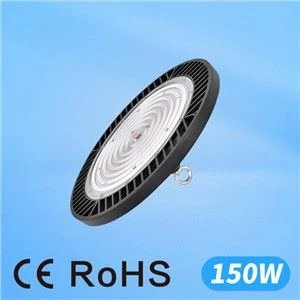
Lighting is where visual similarity causes the most confusion. Standard industrial LED fixtures can have cast-aluminum housings, thick lenses, stainless hardware, corrosion-resistant coatings, and IP66 protection. None of those features alone proves that the fixture is suitable for a hazardous classified location.

Housing, Covers, and Lens Assembly
In a standard fixture, the housing primarily supports the optical, electrical, mechanical, and environmental functions of the luminaire. In a flameproof design, the housing and relevant joints may also be part of the ignition-containment system.
The lens, globe, cover, retaining components, and fasteners should therefore be treated as parts of the evaluated assembly. A replacement that physically fits is not automatically acceptable. Maintenance should follow the manufacturer's instructions and the conditions of the product approval rather than treating a hazardous-location luminaire like a generic sealed high bay.
Temperature Class and LED Thermal Design
LED fixtures still generate heat through LED modules, drivers, power-conversion components, terminals, and conductors. In hazardous locations, heat management is not only a lifetime or lumen-maintenance issue. The equipment must also remain within the temperature limitations associated with its approval.
OSHA requires approved hazardous-location equipment to be marked for applicable operating temperature or temperature range under defined conditions, with additional marking requirements when equipment is suitable for ambient temperatures above 40°C. This is why a higher-wattage LED module should not be installed into an existing hazardous-location fixture merely because it fits mechanically.
When comparing hazardous-location lighting, verify:
- Class/Division or Zone marking;
- gas or dust group where applicable;
- protection technique;
- temperature class or maximum surface temperature;
- minimum and maximum ambient temperature;
- input voltage and wattage;
- permitted mounting orientations if restricted;
- environmental rating;
- certificate or listing information;
- approved entries, plugs, glands, and accessories.
For North American projects, review the site's UL844 explosion-proof lighting range. For IEC/European-oriented projects, the ATEX explosion-proof lighting range provides a separate starting point. The final product still has to match the actual project classification and required approval.
5. Explosion-Proof Junction Boxes vs Standard Junction Boxes
A standard junction box normally provides termination space, mechanical protection, grounding continuity, and environmental protection. A hazardous-location junction box has those same basic functions, but its enclosure, cover, cable entries, seals, plugs, and accessories may also be part of a certified protection system.
Covers and Joint Integrity
On flameproof equipment, cover joints and threaded interfaces can be safety-critical. Corrosion, damaged threads, missing fasteners, substituted bolts, warped covers, contamination, or unauthorized machining can change the joint condition from the evaluated construction.
That is why maintenance procedures for a hazardous-location box should include more than checking for water ingress and loose terminals. The inspection should preserve the exact protection features identified by the manufacturer.
Cable Glands, Conduit Entries, Plugs, and Adapters
Cable entries are not an afterthought. A gland or fitting must match more than the cable diameter and thread size. Depending on the protection system, selection can involve:
- the equipment protection concept;
- the cable construction;
- armored or unarmored cable;
- thread form and entry size;
- environmental sealing requirements;
- grounding or bonding provisions;
- installation-standard requirements;
- certificate conditions and manufacturer instructions.
OSHA's Zone provisions also distinguish NPT and metric threaded entries and require appropriate listed conduit, fittings, cable fittings, or adapters where applicable. A gland that screws into the hole is not necessarily a compliant gland for the protection system.
For more detail on enclosure selection and entry considerations, see the site's guide to explosion-proof junction boxes.

Field Modification Is a Certification Question
Drilling another cable entry into an ordinary industrial enclosure may be a routine fabrication task. The same action on certified hazardous-location equipment can alter wall geometry, spacing, threaded engagement, joint construction, or the approved entry arrangement.
Before drilling, tapping, machining, replacing a cover, changing fasteners, or adding an accessory, confirm that the change is permitted by the manufacturer, product documentation, certificate or listing, and governing requirements.
6. Explosion-Proof Distribution Boards vs Standard Distribution Boards
Distribution boards and control panels are more complicated because the enclosure is only one part of the finished assembly. Breakers, contactors, relays, power supplies, terminals, operators, indicators, windows, internal wiring, entries, grounding, and thermal loading can all affect whether the complete board is suitable for the classified location.
A Heavy Box Does Not Create an Approved Ex Panel
Putting ordinary circuit breakers into a heavy cast enclosure does not automatically create an explosion-protected distribution board. The complete arrangement may need to be evaluated as an assembly, with attention to the enclosure protection method, component approvals, spacing, heat generation, operators, cable entries, grounding, and permitted configurations.
This is a major difference from ordinary panel work: the hazardous-location suitability of the final board cannot be inferred from enclosure thickness alone.
Thermal Management Must Be Based on the Actual Assembly
Breakers, transformers, power supplies, relays, contactors, terminals, and conductors all produce heat. A sealed or flameproof enclosure may dissipate that heat differently from an ordinary ventilated panel.
Do not apply a generic breaker-derating percentage to every explosion-protected board. The acceptable continuous loading depends on the specific breaker, enclosure, ambient temperature, internal layout, conductor sizing, manufacturer data, certification conditions, and thermal design of the complete assembly.
Before finalizing a panel specification, obtain the manufacturer's approved loading limits, ambient range, temperature information, and assembly documentation. If those data are missing, "we normally derate by X percent" is not a substitute for product-specific engineering evidence.
Operators and Accessories Are Part of the System
Push buttons, selector switches, pilot lights, meters, windows, drains, breathers, plugs, and external operating mechanisms may penetrate or form part of the enclosure. They should not be treated as decorative components that can be swapped freely during panel fabrication.
For a hazardous-location assembly, verify that every enclosure penetration and accessory is compatible with the approved design.
7. North American Explosionproof vs IEC Ex d
North American "explosionproof" and IEC "Ex d" equipment use related containment principles, but the terms are not interchangeable certificates. They belong to different regulatory, standards, marking, and conformity-assessment frameworks.
OSHA permits explosionproof apparatus for appropriate Class I Division locations and flameproof "d" for appropriate Class I Zone 1 locations. IEC 60079-1 addresses flameproof enclosure "d" for explosive gas atmospheres. The acceptance of a particular product depends on the jurisdiction and the approval system required by the project.
For European-market equipment, Directive 2014/34/EU applies to equipment and protective systems intended for use in potentially explosive atmospheres. An ATEX certificate should not automatically be treated as a U.S. listing, and a North American approval should not automatically be treated as European market conformity.
For a broader explanation of the available technical approaches, see protection concepts for hazardous areas.
8. Common Specification Mistakes
Mistake 1: Treating "Sealed" as "Explosion-Proof"
Water and dust ingress protection does not establish hazardous-location suitability. Verify the hazardous-location marking separately.
Mistake 2: Buying by Industry Name
"Oil and gas," "chemical," or "wastewater" does not define the electrical classification at a specific mounting point. Use the current documented classification.
Mistake 3: Assuming Every Hazardous Area Needs Ex d
Flameproof containment is one protection concept among several. Select the technique permitted for the specific location and equipment.
Mistake 4: Ignoring the Cable Entry System
A correctly certified light or box can still be installed incorrectly if its glands, conduit fittings, plugs, adapters, threads, or seals are not compatible with the required system.
Mistake 5: Substituting Parts Because They Fit
Covers, lenses, bolts, operators, glands, plugs, and other components can be part of the evaluated construction. Physical fit is not evidence of approval.
Mistake 6: Using a Generic Panel Derating Rule
Thermal limits for a distribution board are assembly-specific. Use manufacturer and certification data rather than a fixed percentage copied from another panel design.
Mistake 7: Mixing Certification Systems
ATEX, IECEx, North American listings, and other national approvals should not be assumed equivalent. Confirm what the project and jurisdiction actually require.
Frequently Asked Questions
Is IP66 equipment explosion-proof?
No. IP66 primarily addresses protection against dust and water ingress. Hazardous-location suitability requires separate evaluation and approval. A product can carry both an IP rating and a hazardous-location certification.
Is NEMA 4X the same as explosion-proof?
No. NEMA 4X addresses environmental enclosure protection, including corrosion and water-related conditions. NEMA 250 separately identifies enclosure requirements related to hazardous classified locations. Always verify the hazardous-location approval independently.
Does Class I, Division 2 always require explosionproof equipment?
Not necessarily. OSHA recognizes multiple permitted approaches depending on the equipment and the classified location. Equipment still must be intrinsically safe, approved for the hazardous location, or otherwise demonstrated suitable under the applicable requirements.
Is Ex d the same as North American explosionproof?
They use related containment principles but belong to different standards and certification frameworks. IEC 60079-1 addresses flameproof enclosure "d." North American acceptance depends on the applicable U.S. or Canadian hazardous-location requirements and product approval.
Can a standard junction box be converted into an explosion-proof box?
Adding a gasket, thicker cover, heavier bolts, or an Ex-rated gland does not turn an ordinary enclosure into certified hazardous-location equipment. Suitability depends on the evaluated design and complete assembly.
Can I drill another cable entry into an explosion-proof enclosure?
Do not do so unless the manufacturer and applicable approval documentation permit the modification. Machining can affect the evaluated enclosure construction and approved entry arrangement.
Can ATEX-certified equipment be used in the United States?
Do not assume ATEX certification alone establishes acceptance for a U.S. installation. Confirm the applicable OSHA, project, listing, and authority requirements for the site.
What should I check first when comparing explosion-proof lights?
Start with the documented hazardous-area classification and required certification system. Then verify the material group, protection technique, temperature class, ambient range, environmental rating, and cable-entry requirements before comparing wattage, lumen output, optics, or price.
Conclusion
The most important difference between explosion-proof and standard electrical equipment is not enclosure thickness. It is the way ignition risk is controlled, evaluated, documented, and preserved through installation and maintenance.
For lighting, that means looking beyond a rugged housing to the approved construction, temperature limits, lens and cover assembly, cable entries, and marking. For junction boxes, covers, joints, glands, plugs, adapters, and field modifications matter. For distribution boards, the complete assembly and thermal design matter more than the enclosure by itself.
Start with the classification, identify the approved protection method and certification system, then select the equipment. Do not reverse that sequence.