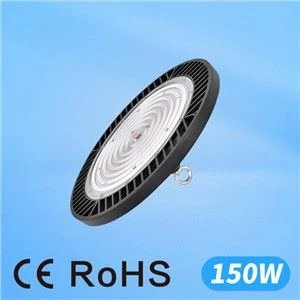
For most commercial and industrial LED fixtures, passive cooling is the sensible default when the design can keep every component within its rated temperature: it runs silently, draws no extra power, and has no fan that can fail. Active (fan-assisted) cooling earns its place when a compact enclosure, a high power density, or restricted airflow makes a passive heat sink too large or too weak to hold the LED within its permitted temperature range.
Neither approach wins automatically. The right choice depends on the complete thermal path, the worst-case ambient temperature, the fixture size, the mounting orientation, the level of contamination, the maintenance access, and what happens if cooling degrades. This guide walks through those trade-offs, gives you a decision matrix and a supplier document checklist, and ends with a worked example that ties the whole selection process together.

Why LED Thermal Management Matters
LEDs are efficient, but they are not cold. The heat they produce is concentrated at the tiny semiconductor junction inside each package, and that is where temperature does the most damage. Excessive junction temperature reduces light output, shifts color, accelerates lumen depreciation, and shortens the life of both the LEDs and the electronics around them. This is why manufacturers publish maximum operating temperatures and thermal-resistance figures that a fixture must respect.
The job of an LED cooling system is not to make the outside of the fixture feel cool to the touch. Its job is to move heat away from the junction and keep every critical component below its limit. The U.S. Department of Energy's work on LED luminaire reliability makes the same point at the system level: drive current, junction temperature, local ambient temperature, and the other components in the fixture all shape how long the whole product lasts, so the LED chip's rated life alone never represents the fixture's life. A useful primer on the wider topic is our overview of thermal management in LED technology.
The surface you touch is not the junction
The hottest point in a luminaire is almost never a surface a person can reach; it is the junction inside the package. Because measuring the junction directly is usually impractical, designers measure a specified solder-point or case temperature and use the package's thermal resistance to estimate the junction temperature. Cree LED's application note on solder-point temperature measurement of XLamp LEDs describes exactly how and where that measurement should be taken.
One consequence surprises people: a warm heat sink is not proof of poor cooling. It can mean heat is moving efficiently from the LED board into the housing. On its own, though, heat-sink temperature tells you little. Read it together with the LED solder-point temperature, the ambient temperature, the driver case temperature, and confirmation that the system has reached steady state before drawing any conclusion.
How Heat Moves Through an LED Fixture
A typical thermal path runs in series: heat is generated at the junction, travels through the LED package, into the printed circuit board (often a metal-core PCB), across a thermal interface material into the heat sink or housing, spreads over the heat sink's area, and finally leaves through convection and radiation into the surrounding air. Cree LED's thermal-management application notes for XLamp LEDs describe this same stack.
Every layer adds resistance, and the layers add up. Because they are in series, the weakest link limits the whole path: a large heat sink cannot rescue a poorly mounted board, a low-quality interface material, a trapped air gap, or an enclosure that traps hot air. Lumileds' heat-sink design guidance (application note WP31) makes the same argument, and it is worth remembering when comparing fixtures that look similar on paper.
A simplified thermal relationship
At the system level, the relationship is often written as:
Tj ≈ Ta + Pd × Rθ,total
Here Tj is the junction temperature, Ta is the ambient temperature, Pd is the thermal power to be dissipated, and Rθ,total is the total thermal resistance from junction to ambient. Treat this as a way to understand the principle, not as a plug-in formula for a whole luminaire. In particular, avoid taking a datasheet RθJA value and treating it as a fixed system resistance: that figure depends on a specific test board, mounting, and measurement conditions. A real design breaks the total into its parts (package, PCB, interface material, heat sink) and accounts for airflow, orientation, driver heat, and enclosure geometry.

What Passive Cooling Is
Passive LED cooling removes heat without a powered fan, pump, or other mechanical device. It relies on conduction, natural convection, thermal radiation, adequate surface area, sound material choices, and correct orientation. In hardware terms that usually means an aluminum heat sink, a die-cast housing, extruded or forged fins, a metal-core PCB, and a thermal interface pad.
Heat pipes and vapor chambers deserve a note here. They move heat from a concentrated source to a larger remote heat sink without any powered pump, so they count as passive heat-transport components even when they appear inside an otherwise fan-cooled system.
Where passive cooling is strong
A passive system has no fan motor, bearing, or control circuit to keep air moving, which removes a whole category of failure points and simplifies the fixture. It is silent, which makes it the natural fit for offices, libraries, theaters, recording spaces, hotels, and similar interiors. It consumes no cooling power, so the fixture's input energy goes to the LEDs, driver, and controls rather than to a fan. And because it needs no open vents, it is usually easier to seal against dust, moisture, and washdown, which matters for high IP-rated enclosures. Routine maintenance is lighter too, though exposed fins still need cleaning in dusty, oily, or fibrous environments; passive is low-maintenance, not maintenance-free.
Where passive cooling runs into limits
Natural convection moves heat less aggressively than forced air, so a passive fixture often needs more aluminum, larger fins, more surrounding clearance, or a lower LED power density. It also depends on orientation, because natural convection relies on warm air rising: a heat sink designed for vertical airflow may underperform mounted horizontally or inside a restricted enclosure. Fin spacing is a real constraint rather than a detail. Adding fins does not always help; if they sit too close together they choke the airflow between them. Lumileds' design examples show that heat sinks optimized for natural convection generally need wider fin spacing than fan-cooled designs, which can tolerate tighter gaps. Finally, a large passive heat sink is wasted if hot air cannot escape the space around it, and dust, grease, or process residue on the fins quietly erodes the surface area that passive cooling depends on.
What Active Cooling Is
Active cooling uses powered equipment to raise heat transfer. In LED lighting the common form is a fan or blower forcing air across a heat sink; more specialized and comparatively rare approaches use pumped liquid, thermoelectric devices, or sealed heat exchangers, which belong to compact or unusual applications rather than typical industrial luminaires. Even a fan-cooled fixture still needs a passive path first: the LED has to reach a heat sink through the board and interface material, and only then does forced air carry heat away faster than natural convection would.
A representative fan-cooled fixture combines an LED board on a heat spreader, a thermal interface material, a compact finned heat sink, a fan or blower, a defined inlet and outlet, temperature monitoring or fan-speed control, and a protection strategy for fan failure. The payoff is lower thermal resistance between heat sink and air, which lets a smaller heat sink shed the same load or lets a compact fixture run a higher power density.
Where active cooling helps
Forced air is useful when the fixture must fit an existing housing or a tight optical design, which is one reason some high-output LED retrofit kits use fans: a passive heat sink big enough for the same load simply will not fit. Directed airflow also clears stagnant hot zones around dense LED arrays or drivers, and it makes high power density practical. Two fixtures of equal wattage can need different cooling: a large fixture with spread-out LEDs may cool passively, while a small one concentrating the same power into a tight array may need a fan. A well-designed active system can also vary fan speed with measured temperature, cutting noise and power at low load, limiting dust intake, extending fan life, and adding headroom when ambient temperature climbs.
The risks active cooling adds
A fan introduces bearings, windings, electronics, wiring, and connectors, and if it stops, thermal performance can fall quickly. A sound design never assumes the fan lasts forever; it builds in fan-speed monitoring, temperature sensing, automatic current reduction, thermal shutdown, fault reporting, or a passive safe-state that holds the fixture within limits at reduced output. Cree LED's guidance likewise advises weighing the benefits of active cooling against reliability, noise, cost, added power, and maintenance. Beyond reliability, fans bring noise that can rise as bearings age and dust builds; they draw dust and fibers inside, and filters that reduce this add their own airflow resistance and upkeep; they consume power that belongs in efficacy calculations; and their open airflow paths complicate sealing in wet or corrosive settings. Maintenance access is the quiet cost that dominates lifecycle economics: replacing even a cheap fan in a ceiling or high-bay fixture can mean a lift, a production stop, or a permit.
Active vs Passive LED Cooling:
| Factor | Passive cooling | Active cooling |
|---|---|---|
| Heat-transfer method | Natural convection and radiation | Forced airflow or another powered method |
| Moving cooling parts | None | Usually a fan, blower, or pump |
| Fixture size | May need a larger heat sink | Supports a more compact heat sink |
| Noise | Silent | May be audible |
| Cooling power | None | Extra electrical power |
| Maintenance | Usually lower | Fan, filter, and airflow path need service |
| Dust behavior | Dust can coat fins | Fan may draw contamination inside |
| Sealing | Generally easier | Harder with open airflow |
| Failure mode | Gradual loss if fins clog | Cooling can drop fast if the fan stops |
| Best fit | Open fixtures, long service intervals, quiet or harsh environments | Compact fixtures, restricted spaces, high power density |

A Worked Example (Illustrative)
The following figures are an illustrative example, not measured results from a specific product; use them to see how the five steps connect, then run your own numbers. Suppose a facility needs a 150 W round high bay for a warehouse whose roof-level air reaches about 45 °C at peak, with moderate dust and roughly one meter of clearance above each fixture.
Step 1 fixes the design ambient at 45 °C rather than the 25 °C floor temperature. Step 2 notes that a large die-cast body with radial fins spreads the 150 W over a generous area, keeping power density modest. Step 3 confirms the fixture hangs in open air with clear space for warm air to rise, though the dust means fins will need periodic cleaning. Step 4 favors passive here: with no fan, there is nothing to replace at height, which matters given the roof access. Step 5 would verify, with covers on and the fixture at 45 °C ambient and full output, that the solder-point and driver case temperatures stay within their ratings after the fixture reaches steady state. In this profile a passive UFO high bay is the stronger choice; had the same 150 W been forced into a compact retrofit body inside a closed legacy housing, the answer could well flip to a fan-assisted design. You can compare real bodies in our range of industrial UFO LED high bay lights.

Common LED Cooling Mistakes
A handful of errors recur often enough to be worth naming. The first is choosing by wattage alone: wattage says nothing about LED area, heat-sink size, enclosure geometry, airflow, or ambient, and there is no universal wattage at which passive stops working and active becomes mandatory. The second is assuming a fan replaces the heat sink; a fan only moves air across a surface, so the LED still needs a low-resistance path into a heat sink or exchanger. Closely related is putting a fan inside a sealed box with no external heat path, which merely stirs the trapped air unless the enclosure passes that heat to the outside. A fourth mistake is ignoring the driver and its capacitors, surge devices, wiring, seals, lenses, and connectors, any of which may hit their limit before the junction does. Fifth is judging performance by hand: a cool-feeling housing can hide a poor internal connection, and a warm one can be transferring heat well, so use the specified measurement points instead. Last is ignoring fan failure; any active design should define what happens when airflow drops and must not run indefinitely above component limits.
The Verdict
Passive cooling is the better starting point for most LED lighting because it is silent, simple, and free of powered cooling parts, which suits open high bays, outdoor luminaires, quiet interiors, and installations that value long service intervals. Active cooling is the right answer when passive cannot deliver enough heat transfer within the available size, airflow, or power density; it makes compact, high-output fixtures possible at the cost of noise, power, maintenance, and extra failure modes.
The real question is not "fan or no fan?" It is whether the complete thermal system can keep the LEDs, driver, and other components within their rated limits under the actual worst-case installation conditions. Before selecting a fixture, review its maximum ambient rating, cooling structure, mounting restrictions, thermal test data, maintenance needs, and fault-protection strategy, and ask for the supplier documents listed above.
Frequently Asked Questions
Is active or passive cooling better for LED lights?
Passive cooling is generally preferable when it can keep components within their limits, because it is silent and has no powered parts to fail. Active cooling becomes the better choice when limited space, restricted airflow, or high power density makes passive cooling insufficient.
Does active cooling make LEDs last longer?
It can lower LED operating temperature when it is well designed, but overall fixture reliability also depends on the fan, controls, driver, dust exposure, and the response to fan failure. A lower LED temperature does not by itself guarantee a longer fixture life.
Can high-power LED lights use passive cooling?
Yes. High-power LEDs can cool passively when the fixture has enough heat-sink area, a low-resistance thermal path, suitable ambient conditions, and adequate natural airflow. There is no universal wattage limit.
Do fan-cooled LED lights require maintenance?
They may need periodic inspection or cleaning of fans, filters, vents, and airflow paths. How often depends on the environment, operating hours, fan design, and contamination level.
How can I tell whether an LED fixture is overheating?
Measure the specified LED case or board temperature after the fixture reaches thermal stability under representative worst-case conditions, and check the driver and enclosure components too. Do not rely on the external surface temperature alone.
Is a heat pipe an active cooling device?
No. A heat pipe is a passive heat-transfer device that moves heat by evaporation and condensation without a powered pump. It can appear in a fully passive fixture or as part of a hybrid design.