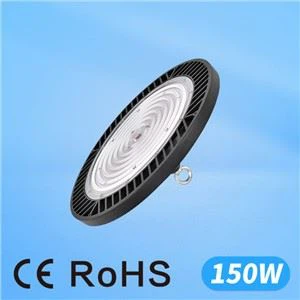
When you specify LED lights for a warehouse, sports hall, factory, parking garage, or public facility, brightness and efficiency are only part of the job. In many of these spaces the fixture also has to survive physical contact - and that is what the IK rating measures. It answers a blunt, practical question: can this light take bumps, ball strikes, dropped tools, equipment contact, or deliberate vandalism without failing early?
This guide explains what IK ratings mean, how the IK00–IK11 chart works, how IK differs from IP, and - most importantly - how to actually choose the right impact-resistant fixture instead of just picking the highest number. Note up front that the fixture-by-fixture recommendations below are practical selection ranges, not universal code requirements; always confirm against local electrical codes and the product datasheet.

What Is an IK Rating for LED Lights?
An IK rating (also called an IK code or impact protection rating) classifies how well an enclosure resists external mechanical impact. For an LED luminaire, the "enclosure" means the housing, lens, cover, and any other exposed part protecting the internal driver and boards. The rating is expressed in joules of impact energy - the higher the joule value, the harder the impact the enclosure is designed to withstand under defined test conditions.
The framework comes from the international standard IEC 62262, published by the International Electrotechnical Commission (IEC). A quick orientation:
- A low IK rating is fine for an office ceiling light that nothing will ever hit.
- IK08 suits many gyms, warehouses, and high-traffic commercial spaces.
- IK10 is the common pick for industrial sites, public areas, and anywhere vandalism or heavy mechanical impact is realistic.
IK Rating Chart: IK00 to IK11 Explained
The scale traditionally runs IK00 to IK10, where IK10 equals 20 joules. The IEC 62262:2002+A1:2021 update introduced IK11 at 50 joules for extreme mechanical-impact conditions, so you will now see it on some heavy-duty product data.
| IK Rating | Impact Energy | General Meaning |
|---|---|---|
| IK00 | No defined protection | No impact resistance rating |
| IK01 | 0.14 J | Very light impact protection |
| IK02 | 0.20 J | Light accidental contact |
| IK03 | 0.35 J | Minor mechanical impact |
| IK04 | 0.50 J | Small object impact |
| IK05 | 0.70 J | Moderate light-duty protection |
| IK06 | 1 J | General commercial protection |
| IK07 | 2 J | Better protection for low-to-medium risk areas |
| IK08 | 5 J | Common for gyms, warehouses, and high-traffic areas |
| IK09 | 10 J | Strong protection for demanding environments |
| IK10 | 20 J | High impact resistance for industrial or vandal-prone locations |
| IK11 | 50 J | Extreme-duty resistance where specified (per IEC 62262 A1:2021) |
Treat the chart as a starting point, not the whole answer. Real-world durability also depends on the lens material, housing, mounting method, installation height, and the type of impact the fixture will actually face.

IK Rating vs IP Rating: What Is the Difference?
These two get confused constantly, but they measure different things. IK rating covers mechanical impact - how well the enclosure resists being struck. IP rating covers ingress - how well it keeps out dust and water, and is defined by a separate standard, IEC 60529. A single fixture might be IK10 for impact and IP65 for dust and water jets, and neither number implies the other. An impact-tough fixture can still be unsuitable for wet locations; a waterproof one can still crack under a strike.
For outdoor, industrial, washdown, or otherwise harsh installations, evaluate IK and IP together. If the IP side is new to you, our overview of IP protection classes and codes pairs naturally with this guide.
How IK Testing Works - and Why It Affects Fixture Selection
IK testing applies a defined impact energy to the enclosure using a controlled striker - typically a pendulum hammer, spring-operated hammer, or vertical free-fall hammer depending on the energy level - rather than random abuse. The enclosure is struck at its most vulnerable exposed points, and to pass it must show no damage that compromises safety or protection. That standardization is the point: instead of trusting a vague "rugged," you can compare a tested impact level across brands.
Two caveats worth knowing. First, an IK rating is not a promise of indestructibility. Second, the rating may apply to the complete luminaire or only to a specific tested assembly - so confirm scope on the datasheet. For a deeper primer, see what the IK code means in LED lights.
How to Choose the Right IK Rating in 5 Steps
Rather than defaulting to the highest number, work through the risk in order:
- Identify the likely impact source. A basketball, a forklift mast, a dropped hand tool, and intentional vandalism are very different threats and point to different ratings.
- Check mounting height and public access. A high bay 30 ft over a warehouse floor faces occasional, indirect contact; a wall-mounted fixture at head height in a public corridor is exposed constantly. Height often matters more than the IK number alone.
- Match the rating to the fixture type. Some formats (low wall packs, sports-hall fixtures, garage luminaires) live in the impact zone; others (elevated high bays) rarely get touched.
- Combine IK with IP, temperature, corrosion, and certification needs. Impact resistance rarely travels alone - washdown adds IP, cold stores add temperature, coastal sites add corrosion, and rebate or compliance programs add certifications.
- Confirm the test scope and supplier documentation. Verify the rating covers the parts that will actually be hit, and ask for the test report.
Recommended IK Ratings by LED Fixture Type
Different fixture formats sit in different risk zones. Use this as a planning guide, then confirm on the datasheet.
| Fixture Type | Typical IK Range | Why |
|---|---|---|
| Warehouse high bay / LED high bay fixtures | IK08–IK10 | Mounted high, but exposed to forklift and handling contact |
| Linear high bay | IK08–IK10 | Longer body, aisle and rack contact risk |
| Vapor-tight / tri-proof fixtures | IK08–IK10 + suitable IP | Washdown and impact combined |
| Flood lights | IK07–IK09 | Often elevated, but exposed outdoors |
| Wall packs | IK08–IK10 | Low mounting, easy public reach |
| Sports-hall / gym fixtures | IK08–IK10 | Direct ball-strike risk |
| Parking garage / canopy fixtures | IK10 | Public access, moisture, and vandalism |

Common LED Applications by IK Rating
The following are practical selection ranges, not universal code requirements.
| Application | IK Range to Consider | Why It Matters |
|---|---|---|
| Office or retail lighting | IK06–IK07 | Low physical impact risk |
| Warehouse high bay lighting | IK08–IK10 | Equipment movement and contact |
| School gym lighting | IK08–IK10 | Ball impact and high activity |
| Parking lot / garage lighting | IK08–IK10 | Weather, public access, vandalism |
| Stadium or sports lighting | IK08–IK10 | Ball strikes, vibration, exposed mounting |
| Heavy industrial lighting | IK09–IK10 | Machinery and heavy-duty conditions |
| Public transit areas | IK10 | Constant public exposure and vandalism |
| Tunnels and underpasses | IK10 or higher if specified | Abuse, vibration, difficult maintenance |
| Food processing / washdown | IK08–IK10 + suitable IP | Impact plus moisture and cleaning |
| Hazardous / explosion-risk areas | Project-specific | IK is secondary to hazardous location certification (ATEX, IECEx, UL) - never selected on impact alone |
IK08 vs IK10 LED Lights: Which Should You Choose?
IK10 resists more impact than IK08, but higher is not automatically better - it can cost more and narrow your product options.
Choose IK08 when the fixture sits above normal reach, impact is occasional rather than constant, and the main concern is ball strikes, light equipment contact, or general traffic. Choose IK10 when the fixture is in a vandal-prone area, heavy tools or machinery are realistic, maintenance access is difficult or expensive, a failure would create a safety or operational problem, or the specification simply requires it.
As a working rule, we would not drop below IK10 for public-access fixtures mounted within reach, or for garages and transit areas where both moisture and abuse are a given. The right choice is the rating that matches the real risk - not the biggest number on the datasheet.
Field Examples: Matching IK Rating to the Real Risk
These three scenarios show how the same "impact-resistant" label plays out differently on site.
School gym. Risk source: repeated ball strikes, often on the lens rather than the housing. The failure point is usually a cracked lens or a bent guard, not the body. Recommendation: IK08–IK10 with a polycarbonate lens or a protective wire guard, mounted or aimed to reduce direct hits. For layout and mounting specifics, our notes on stadium and sports-hall lighting requirements are a useful companion.
Parking garage. Risk source: public access, vandalism, plus moisture and vehicle contact. Here IP often matters as much as IK. Recommendation: IK10 combined with IP65, with attention to lens material and secure mounting - the goal is fewer lift-rental call-outs, not just a higher number.
Warehouse. Risk source: forklift masts, racking contact, and handling activity at height. Recommendation: IK08–IK10 high bays, where the payoff is lower relamping labor and less fixture damage rather than raw joules.
Common Mistakes When Reading IK Ratings
- Assuming IK10 means waterproof. It only covers impact. Water and dust are the IP rating's job.
- Chasing the highest IK without the application. A higher rating can add cost and limit options; match it to the real risk.
- Ignoring the lens or cover. A strong housing with a weak lens still fails. Lens choice matters - see how polycarbonate and acrylic lens materials behave under impact and light transmission before deciding.
- Treating "rugged" as a rating. "Heavy-duty" and "durable" are not tested values; look for a stated IK code in the documentation.
- Forgetting the mounting hardware. In high-vibration or high-impact areas, the bracket and installation method are part of the durability story.
FAQ About IK Ratings for LED Lights
What does IK rating mean on LED lights?
It shows the level of mechanical impact protection the fixture enclosure provides, in joules. Higher numbers withstand harder impacts under the defined IEC 62262 test.
Is IK10 better than IK08?
IK10 resists more impact, but IK08 is enough for many warehouses, gyms, and high-traffic spaces. IK10 is the safer pick for industrial, public, or vandal-prone areas.
Is IK rating the same as IP rating?
No. IK covers mechanical impact (IEC 62262); IP covers dust and water ingress (IEC 60529).
What is the highest IK rating for LED lights?
IK10 (20 J) tops the traditional scale. IK11 (50 J) was added in the IEC 62262 A1:2021 update for extreme-duty use and should be treated as a specialized requirement, not a default.
Is IK10 required for warehouse lighting?
Not universally. Many warehouses run IK08 high bays successfully, but IK10 is worth specifying where forklift contact, low mounting, or costly access make damage expensive to fix. Confirm against your own site conditions and codes.
What IK rating is recommended for vandal-resistant lighting?
IK10 is the common baseline for vandal-prone public areas, evaluated together with lens material, mounting height, and secure hardware - the IK code alone does not make a fixture vandal-proof.
What IK rating is best for gym lighting?
IK08 or higher, because ball strikes are likely. High-risk sports halls often justify IK10 plus a protective guard.
Do outdoor LED lights need an IK rating?
Not always a high one, but parking lots, transit areas, schools, and vandal-prone sites usually benefit from IK08–IK10 fixtures paired with a suitable IP rating.
Does a higher IK rating mean the LED will last longer?
Only against impact damage. Overall LED life still depends on thermal design, driver quality, installation, and operating conditions.
Bottom Line
IK rating matters most where physical impact is a real possibility. For low-risk commercial spaces, a moderate rating is enough; for warehouses, gyms, garages, transit areas, and industrial sites, IK08–IK10 is usually the right band. The discipline is matching the rating to the actual risk rather than the biggest number.
Before you finalize a fixture, line the IK rating up against the datasheet, lens material, mounting method, IP rating, and required certifications - and ask the supplier for the test report so you know exactly what was tested. That single comparison prevents most impact-related failures, cracked lenses, and avoidable relamping calls down the line.