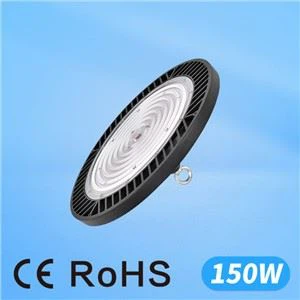

LED vapor proof lights are sealed luminaires built for spaces where ordinary fixtures fail within months because of moisture, dust, humidity, splashing water, washdown cleaning, or chemical vapors. You find them in car washes, parking garages, food processing areas, cold storage rooms, warehouses, outdoor canopies, tunnels, and other demanding commercial and industrial environments. The LED version adds high efficiency and a long service life, which is why it has largely replaced fluorescent vapor tight fixtures.
The hard part is not finding a vapor proof fixture. It is matching the right one to the job. The correct choice depends on how much water and dust the area actually sees, whether it gets washed down, the operating temperature, the mounting height, and which certifications the space requires. This guide explains what these fixtures are, the benefits they deliver, the main types available, how IP ratings work, and how to specify the right fixture without overpaying or under-protecting.
Match the fixture to four things - how much water and dust the area really sees, whether it gets washed down, the operating temperature, and any code or sanitation requirement. IP65 covers most damp or dusty interiors, IP66 suits car washes and heavy spray, and IP69K is for high-pressure, high-temperature washdown. Food zones usually need NSF certification, and hazardous classified areas need certified explosion proof fixtures rather than vapor proof ones. Compare fixtures by lumen output and light distribution rather than wattage, and confirm the UL or ETL listing and the wet-location marking before you buy.
What Are LED Vapor Proof Light Fixtures?
A vapor proof fixture is the industrial workhorse of commercial lighting: sealed housing, gasketed lens, corrosion-resistant materials, and protected wiring entries that keep moisture, dust, and chemical vapors out of the electronics. The construction overlaps with vapor tight and tri-proof fixtures, but the goal is the same - keep the light working in conditions that would shorten the life of a normal fixture, including high-pressure washdowns and corrosive air.
The protective features worth checking on the spec sheet are consistent across the category:
- IP65 to IP69K ratings for protection against dust and water at different pressures
- IK impact rating (often IK08 or higher) to shield the lens and internals from knocks in active areas
- Corrosion-resistant housing to resist chemical attack in aggressive atmospheres
- Sealed gaskets and waterproof connectors that hold the seal during cleaning and humidity cycling
- Shock-resistant polycarbonate or acrylic lens that keeps light output after impact
Every facility presents a different mix of these challenges. Manufacturing plants fight airborne particles, food plants need washdown capability, and cold rooms demand fixtures that run reliably below freezing. There is no single best vapor proof fixture - only the best match for the exposure, cleaning method, temperature, mounting height, and code requirements of the space.

Vapor Proof vs. Vapor Tight: Are They the Same?
In day-to-day lighting conversations, "vapor proof" and "vapor tight" usually describe the same category of sealed fixture for wet, dusty, or harsh areas. What matters is not the name but the tested rating and construction. A fixture labelled "vapor tight" is not automatically suitable for high-pressure washdown, chemical exposure, food zones, or full outdoor exposure.
Treat both terms as category labels, then read the specification sheet. Before you buy, confirm the IP rating, the wet-location marking, the housing and lens material, the operating temperature range, the certifications, and the installation instructions. If you want the background on construction and where sealed fixtures fit, this overview of what a vapor tight fixture is and where it is used is a useful starting point.
Advantages of LED Moisture-proof Lighting
Energy savings. Replacing fluorescent, metal halide, or high-pressure sodium fixtures with LED commonly cuts lighting energy by half or more, and high-hour operations see the fastest payback. The exact figure depends on what you replace, how many hours the lights run, and whether you add controls. The U.S. Department of Energy's LED adoption analysis shows that long-hour commercial and industrial applications - exactly where vapor proof fixtures live - deliver some of the largest realized savings from LED conversion.
Lower maintenance. LED fixtures remove the recurring cost of tube changes, ballast replacements, and repeated gasket service that defined fluorescent vapor tight systems. With fixtures rated for tens of thousands of hours, you open a sealed fixture far less often, which keeps the gasket and seal intact longer.
Better light quality. Constant-current LED drivers eliminate the flicker and hum of fluorescent ballasts, and diffused optics spread light evenly while cutting the glare that bare lamps create in garages and loading docks. Workers consistently report less eye strain after a conversion.
Versatility and simpler retrofit. Wet-location and high-IP options run in car washes, gas station canopies, and washdown rooms where interior fixtures would fail, and 120-277V drivers self-adjust to building voltage, so most retrofits need no extra transformers or special wiring. LEDs also emit little UV and infrared, which helps protect stored goods in pharmaceutical, food, and retail storage areas.
Types of LED Vapor Proof Lights
Most vapor proof projects come down to three options. Choosing among them is mostly a question of budget and how aggressive the environment is.
LED tube retrofit
The most straightforward upgrade from fluorescent. You bypass the ballast and install LED tubes in an existing housing, which keeps upfront cost low. It only works when the housing, gasket, and lens still seal properly - and the single most common mistake is reusing a tired gasket. Replace the gasket during the conversion, or the fixture loses the protection that made it vapor proof in the first place.
Integrated IP65 and IP66 fixtures
Sealed one-piece units that cover most warehouse, garage, and general wet or dusty areas. A die-cast aluminum or polycarbonate body with a PC lens handles a wide temperature range, and control options such as 0-10V dimming, occupancy sensors, and emergency battery backup add operational flexibility. Cary's sealed linear range, the IP66 LED tri-proof lights, is a typical example of this fixture class.
IP69K washdown systems
Fully sealed fixtures for high-pressure, high-temperature washdown in food processing and pharmaceutical plants. They use smooth, crevice-free housings that give bacteria nowhere to accumulate, and are often NSF certified. Specify IP69K only where the cleaning protocol justifies the higher cost - it is overkill in a standard warehouse.
Where Are LED Vapor Proof Lights Used?
Consider LED vapor proof lights anywhere moisture, dust, cleaning water, humidity, or airborne contaminants can affect performance. The point most buyers miss is that exposure varies within a single building, so the spec should vary with it.
Car washes
A car wash is not one environment. The wash tunnel takes direct chemical spray and is the most aggressive zone; the entrance and exit see splash plus weather; the equipment and pump room is humid but rarely sprayed. The hidden risk here is corrosion, not water ingress. Chloride- and detergent-laden mist can corrode aluminum housings and steel mounting clips even when no water gets inside the fixture, so stainless steel clips and a corrosion-resistant or coated housing matter as much as the IP number. A practical tunnel spec is IP66 with a polycarbonate lens and stainless steel clips.
Parking garages
Garages expose fixtures to vehicle exhaust film, dust, humidity, traffic vibration, and periodic hose-down cleaning. Ramps and entrances also catch weather and road salt, while interior decks stay drier. The risk to plan for is impact and tampering, so a polycarbonate (not glass) lens and an impact-rated housing hold up better to cart and ball strikes. Because garages run around the clock, occupancy sensors usually pay for themselves quickly.
Food processing facilities
Washdown zones, splash zones, and dry non-food zones each have different requirements. The controlling factors are lens cleanability and shatter resistance: smooth, crevice-free housings and shatter-resistant lenses, plus NSF certification wherever the fixture sits in or above a food zone. Where high-pressure, high-temperature cleaning is routine, IP69K is the right target.

Cold storage and walk-in freezers
Cold rooms need a driver rated to the actual room temperature, and they need condensation management. When doors cycle and warm, humid air meets cold surfaces, moisture can form inside a fixture that is not properly sealed. The two failure points to check are a driver not rated for the low temperature and a housing that "breathes" and pulls in humid air. This explanation of why cold storage needs purpose-built fixtures covers the temperature and sealing issues in more detail.
Warehouses and manufacturing plants
Dust, particulate, vibration, and occasional moisture all shorten the life of unsealed fixtures, and loading docks add weather. The most common mistake in these spaces is choosing by wattage and ending up with dark aisles or glare, which a quick layout prevents.
Outdoor canopies, tunnels, and utility areas
Gas station canopies, covered loading docks, and walkways need a wet-location marking plus an IP rating that matches wind-driven rain and any washdown. Tunnels, utility rooms, and stairwells mainly need durability and low maintenance because they run long hours in humid, dirty conditions.
IP Ratings Explained: IP65 vs. IP66 vs. IP67 vs. IP69K
An IP (Ingress Protection) rating, defined by the international standard IEC 60529, tells you how well an enclosure resists solids and water. The first digit covers solid particles such as dust, and the second covers water. For vapor proof LED lights the common ratings are IP65, IP66, IP67, and IP69K.
| IP Rating | General meaning | Typical use |
|---|---|---|
| IP65 | Dust-tight; protected against low-pressure water jets | Warehouses, garages, damp interiors, covered outdoor areas |
| IP66 | Dust-tight; protected against powerful water jets | Car washes, industrial areas, outdoor sites with heavier exposure |
| IP67 | Dust-tight; protected against temporary immersion | Areas where water pooling or short immersion is possible |
| IP69K | Protected against high-pressure, high-temperature washdown | Food processing, sanitation zones, pharmaceutical and washdown areas |
Two technical points are worth getting right. First, the water ratings are not a simple ladder. Passing the immersion tests (IPX7 or IPX8) does not prove a fixture survives high-pressure jets (IPX6), because IEC 60529 treats jets and immersion as different tests. If a space needs both, look for a dual rating such as IP66/IP67. Second, IP69K originates from the German standard DIN 40050-9 and is now reflected in ISO 20653; it extends the IEC system specifically for close-range, high-pressure, high-temperature spray. A deeper walkthrough of how IP codes are structured is available if you want the full digit-by-digit breakdown.
A higher IP number is not automatically better. It can cost more and add nothing in a space that only sees humidity or occasional splash. Match the rating to the real exposure.
Which IP Rating Do You Need?
| Application | Recommended direction | Why |
|---|---|---|
| General warehouse with dust or light moisture | IP65 | Usually enough for dust and occasional water |
| Parking garage | IP65 or IP66 | Depends on humidity, exhaust, and cleaning method |
| Car wash bay or tunnel | IP66 or higher | Direct spray and cleaning exposure are more demanding |
| Food processing washdown zone | IP69K where required | High-pressure, high-temperature cleaning is used |
| Cold storage | IP65 or IP66 with low-temperature rating | Condensation and low temperature both matter |
| Outdoor canopy | Wet location plus a suitable IP rating | Exposure depends on wind, rain, and mounting position |
| Chemical or corrosive area | IP rating plus corrosion-resistant materials | IP rating alone does not prove chemical resistance |
| Hazardous classified location | Certified explosion proof fixture | Vapor proof lights are not hazardous-location rated |
Vapor Proof vs. Wet Location vs. NSF vs. Explosion Proof
These four terms are often confused, but they solve different problems.
Vapor proof lights
Sealed fixtures for moisture, dust, vapor, and harsh commercial or industrial conditions. They may be suitable for wet locations, but only if the label and specification sheet confirm it.
Wet location lights
A wet-location fixture is intended for areas where water can drip, splash, or run onto it. That marking matters for outdoor and washdown-adjacent spaces, but it does not by itself make a fixture food-safe, corrosion-resistant, or fit for high-pressure washdown.
NSF certified lights
NSF certified lighting is often required in food processing, commercial kitchens, and sanitation-sensitive areas. These fixtures are designed for cleanability and food-zone material safety, following the requirements in the NSF food equipment standards (NSF/ANSI 2). If your facility faces health inspections, do not assume a standard vapor proof light meets the requirement.
Explosion proof lights
Explosion proof fixtures are built and certified for hazardous classified locations where flammable gases, vapors, or combustible dusts may be present. Standard vapor proof lights are not designed to contain an internal ignition. This is the most important safety distinction in this guide: vapor proof does not mean explosion proof. If the area is classified as hazardous, consult a qualified electrical engineer and specify fixtures approved for that classification, such as Cary's ATEX LED explosion proof lights.
How to Choose LED Vapor Proof Lights by Environment
Specifying is easier when you follow a sequence instead of comparing products by wattage and price.

Step 1: Identify the environment
Start with the real conditions in the installation area. Is it indoor, outdoor, covered, or exposed? Will it meet splashing water or high-pressure washdown? Are there cleaning chemicals, salt, ammonia, oils, or corrosive vapors? Is the space dusty, very hot, very cold, or subject to vibration and impact? Are there food-safety, hazardous-location, or local code requirements? Answering this first prevents overbuying in simple areas and under-specifying in harsh ones.
Step 2: Choose the protection level
For basic damp or dusty areas, IP65 is usually enough. For heavy spray or stronger cleaning, IP66 is more realistic. For temporary immersion risk, consider IP67. For high-pressure washdown, IP69K is the right target. Confirm the wet-location marking if water can hit the fixture directly, and remember that ingress protection does not confirm corrosion resistance, chemical resistance, food safety, or hazardous-location suitability.
Step 3: Match light output and distribution
Do not choose by wattage. LED efficiency varies between products, so lumen output and distribution are far more useful, as explained in this guide to comparing lumens to watts. Weigh the brightness the task needs, the mounting height, fixture length and spacing, beam angle or lens type, glare control, and the mounting method (surface, pendant, or chain). For a warehouse aisle, mounting height and beam distribution usually decide whether you get uniform light or dark gaps. On any larger project, a pre-installation lighting layout is the most reliable way to avoid dark spots, glare, and over-lighting.
Step 4: Select color temperature, CRI, and controls
Color temperature shapes how the space feels and how clearly people see. 4000K is a neutral choice for general commercial and industrial spaces, while 5000K gives brighter, daylight-like visibility in garages, production areas, and inspection zones. CRI matters where color accuracy counts, such as packaging, inspection, and food-related work. Controls add efficiency: 0-10V dimming, occupancy sensors, daylight sensors, emergency battery backup, and field-adjustable wattage or color temperature. In low-traffic storage rooms, stairwells, and garages, occupancy sensors are especially effective.
Step 5: Check certifications and warranty
Before buying, review the safety listing, wet-location suitability, any DLC listing for rebates, NSF certification for food or sanitation areas, emergency-lighting compliance where required, the ambient temperature rating, and the warranty terms. Commercial-grade vapor proof fixtures typically carry a five-year warranty, but warranty support matters just as much as the length: on commercial and industrial projects, downtime, replacement logistics, and product availability often outweigh the fixture price.
Recommended Fixture Specs by Application
This table turns the guide into a quick decision aid. Treat it as a starting point, then confirm against the specification sheet.
| Application | Minimum to check | Preferred features | Avoid |
|---|---|---|---|
| Car wash bay or tunnel | IP66 or higher, wet location | Corrosion-resistant housing, sealed polycarbonate lens, stainless steel clips | Basic damp-location fixtures, glass lenses |
| Food washdown zone | IP69K where required | NSF certification, shatter-resistant lens, smooth cleanable surface | Non-food-zone fixtures, crevice-prone housings |
| Parking garage | IP65 or IP66 | Impact-resistant lens, occupancy sensors, wide distribution | Choosing by wattage only |
| Cold storage or freezer | IP65 or IP66, low-temp rating | Low-temperature driver, fully sealed housing, optional emergency backup | Standard-temp drivers, fixtures that draw in humid air |
| Warehouse or loading dock | IP65 (IP66 at docks) | Correct lumen output for mounting height, sensors, DLC listing for rebates | Under-lit aisles, glare from poor distribution |
| Hazardous classified area | Hazardous-location listing | Certified explosion proof fixture for the exact class, division, or zone | Substituting any vapor proof fixture |
Standards and Certifications
Each mark on a spec sheet answers a different question. Knowing what each one covers keeps you from assuming one listing proves everything.
- UL or ETL listing covers electrical safety and construction integrity through a nationally recognized testing laboratory. Both are widely accepted.
- IP rating (IEC 60529) covers ingress protection against solids and water only. It says nothing about corrosion, chemicals, saltwater, or food safety.
- IK impact rating indicates resistance to mechanical damage, which matters in garages, docks, and production areas where strikes are likely.
- NSF / NSF/ANSI 2 covers food-zone material safety and cleanability, required wherever a fixture sits in or above a food zone.
- DLC listing (QPL) verifies energy and quality performance and is used by utilities to determine rebate eligibility. Rules vary by program, so confirm the exact model against the DLC Qualified Products List and your local utility before counting on a rebate.
- Hazardous-location listing (Class and Division, or Zone) is required where flammable gas, vapor, or dust may be present. The NFPA 70 National Electrical Code, Article 500 series, defines these classified locations and the equipment allowed in them. A vapor proof fixture is never a substitute.
Common Mistakes to Avoid
Choosing by wattage only. Wattage is power draw, not useful light. Compare lumen output, distribution, efficacy, and layout results instead.
Assuming IP69K is always best. IP69K is valuable for high-pressure washdown but unnecessary in a basic warehouse or covered garage, where it just adds cost. For most garages cleaned by hose-down, IP65 or IP66 is the realistic target.
Ignoring corrosion resistance. A fixture can hold a strong IP rating and still corrode in a coastal, ammonia, or chemical environment. Those spaces need specific housing materials, coatings, clips, and lenses, not just a high IP number.
Reusing a worn gasket on a retrofit. When you re-lamp an existing vapor tight housing with LED tubes, a tired or improperly seated gasket quietly defeats the seal. Replace the gasket during the conversion.
Confusing vapor proof with explosion proof. This is a safety issue, not a preference. Use a certified explosion proof fixture in hazardous classified locations.
Skipping the temperature rating. Freezers, hot industrial areas, and exposed outdoor sites can push a fixture outside its operating range. Always check the ambient temperature rating.
FAQ
Q: Are vapor proof lights waterproof?
A: Not exactly. Many are water-resistant or wet-location rated, but "waterproof" is too vague for commercial selection. Check the IP rating and wet-location marking, since IP65, IP66, IP67, and IP69K describe very different levels of water protection.
Q: What is the difference between IP65 and IP66?
A: Both are dust-tight. The difference is the water test: IP65 resists low-pressure water jets, while IP66 resists powerful water jets. For damp or dusty interiors IP65 is usually enough; for direct spray or stronger cleaning, step up to IP66.
Q: What is the best IP rating for vapor proof lights?
A: There is no single best rating. IP65 fits general wet or dusty spaces, IP66 handles stronger jets, and IP69K is for high-pressure washdown. The right rating is the one that matches the real exposure, not the highest number.
Q: Are vapor proof lights good for car washes?
A: Yes, when specified correctly. Aim for IP66 or higher in the wash tunnel, and prioritize corrosion resistance - a coated or corrosion-resistant housing, a sealed polycarbonate lens, and stainless steel mounting clips - because detergent mist attacks hardware even when water cannot get inside.
Q: Can you re-lamp a fluorescent vapor tight fixture with LED?
A: Often, yes, as long as you keep the seal. Many existing housings accept LED tubes after the ballast is bypassed, but the gasket condition and correct reassembly are critical. Replace the gasket during the conversion, because any compromise to the seal cancels the fixture's protection.
Q: Can vapor proof lights be dimmed?
A: Many can. Look for 0-10V dimming in the specification, and combine it with occupancy or daylight sensors in low-traffic areas such as garages, storage rooms, and stairwells to cut energy use.
Q: How many lumens do I need?
A: It depends on mounting height and the task, so think in delivered light rather than a single lumen figure. General storage and circulation areas commonly target lower light levels, while inspection and detailed work need more. A 4-foot sealed fixture often ranges from roughly 4,000 to 10,000-plus lumens, but the reliable answer comes from a lighting layout for your ceiling height and spacing.
Q: How are vapor proof lights installed?
A: Surface mounting is the most common method because it keeps the fixture protected from equipment damage and simplifies maintenance access. Pendant or chain mounting works better in high-ceiling spaces, where surface mounting would create glare; suspension uses aircraft cable or chain depending on fixture weight and local code. Ceilings above roughly 20 feet often benefit from pendant mounting for more even distribution.
Q: What is the difference between explosion proof and vapor tight lighting?
A: They use opposite strategies. An explosion proof fixture is built to let a flammable atmosphere enter and then contain any internal ignition, cooling the escaping gases through engineered flame paths so they cannot ignite the surrounding area. A vapor tight or vapor proof fixture instead seals the atmosphere out, but its construction is not designed to contain an explosion if ignition occurs inside. That is why a vapor proof fixture cannot stand in for an explosion proof one in a classified location.
Q: Are vapor proof LED lights acceptable in hazardous or explosive locations?
A: No. Vapor proof fixtures lack the specialized construction required for explosive atmospheres, and using them there violates electrical codes and creates serious safety risk. For classified areas, use certified explosion proof fixtures matched to the hazard - for example, Class I Division 1 versus Class I Division 2 lighting depending on the classification - and confirm the design with a qualified electrical engineer.
Q: Can vapor proof lights be used outdoors?
A: Yes, if the fixture is rated for outdoor or wet-location use and the IP rating matches the exposure. Covered canopies, partially exposed areas, and fully exposed sites can each call for different specifications.
Q: What color temperature is best for vapor proof LED lights?
A: 4000K is a common neutral choice for commercial and industrial spaces. 5000K is preferred where brighter, daylight-like visibility helps, such as garages, production areas, and inspection zones.
Q: Do food processing areas need NSF certified vapor proof lights?
A: Often, yes. In splash zones, sanitation areas, and food processing spaces, NSF certification may be required or strongly preferred. Confirm your facility's requirements before selecting a product.
Final Takeaway
LED vapor proof lights are a practical solution for wet, dusty, humid, and harsh environments, but the right fixture depends on far more than the product name. Specify around the actual conditions: required IP rating, mounting height, light output and distribution, housing and lens material, certifications, and maintenance access.
For simple damp or dusty areas, IP65 is usually enough. For stronger spray or industrial cleaning, IP66 or higher fits better. For high-pressure washdown, IP69K is the right choice, and food zones should add NSF certification. For hazardous classified areas, use a properly certified explosion proof fixture rather than a standard vapor proof one. Match protection, performance, and compliance to the real conditions of the space, and the fixture will last as long as the rest of your installation.